THE DISASTERS AND HIS IMPACT IN THE SOCIETY
.
Is undoubted to say that the natural threats like the disasters in that they can convert are integral part of the life of any culture or society, in this case the history of Latin America and the no varied Carribean in nothing of the general rule The earthquakes and the hurricanes have earned miles of victims and have ocasionado the loss of a lot of million dollars from Mexico until Chile, a clear example of this have it in 1976.An earthquake of 7.5 degrees in the scale of Richter shook to Guatemala.
CONCEPT
Disasters can be understood as an event that causes severe abnormalities in people, goods, services and the environment, exceeding the response capacity of the affected community...
The disasters arise from the interaction and coincidence in a given time and space, of a potentially destructive natural phenomenon (danger) and conditions of vulnerability within the communities and surroundings in which it hits the phenomenon. In order to exemplify better east concept usually it is expressed that the disaster is sumatoria of dangers and vulnerability, consequently both factors are constituted in conditioners so that a disaster takes place.
Types of disasters
EARTHQUAKES

An earthquake is the abrupt Earth movement caused by the abrupt accumulated energy liberation during a long time. Generally the term is associated earthquake with the seismic movements of considerable dimension, although rigorously its etimología means " Earth movement
The underground activity originated by a volcano in eruption process can originate a similar phenomenon. Also it has been considered that an extrinsic force, caused by the man, could trigger an earthquake, probably in a place where already there was a geological fault. It is as well as it is had if nuclear experiments, or the force of million tons of accumulated water in artificial dams or Lagos could produce such phenomenon.
TSUNAMI.
it is a wave or series of waves that take place in a mass of water to the being pushed violently by a force moves that it vertically. This term was adopted in a 1963 congress. Coastal or underground earthquakes, volcanos, meteorites, landslides and explosions of great magnitude even can generate a TSUNAMI. Formerly it was called “swells to them”, “tidal waves” or “marine seismic waves”, but these terms have been being obsolete, since they do not describe the phenomenon suitably. Both first they imply tide movements, that it is a different phenomenon and that has to do with desbalance oceanic caused by the gravitational attraction exerted by planets, the sun and especially the moon. The seismic waves, on the other hand, imply an earthquake and we already saw that there are several other causes of a TSUNAMI.
STORM

A tornado is a violent and unpredictable meteorological phenomenon, characterized by winds that turn from a dense cloudy formation in the form of funnel. This formation is visible by the dust presence that is sucked of the Earth and by the condensation in its center drops of water. The width of a tornado can vary almost from about thirty centimeters to a pair of kilometers. One does not know with exactitude the speed at which the wind moves in its interior, but esteem that can reach the 500 km/h. He is not strange, then, that at such speed can drag trees, automobiles, houses. etc. Luckyly, only 2% of the 300 tornados exceed km/h. The majority of tornados measures around the 50 meters in width, travels to 50 km/h and lasts minutes just a few.
HURRICANES
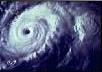 The hurricane is a type of tropical revolving storm, generic term that is used for any meteorological phenomenon that has winds in the form of spiral and that moves on the terrestrial surface. It corresponds generally to a center of low atmospheric pressure and of temperature higher than the one than it has immediately around. It has a circulation closed around a central point. They rotate in sense in opposition to the needles of the clock in the North Hemisphere and the sense of the needles of the clock in the South Hemisphere. The same phenomenon denominates cyclone in the Indian Ocean and the South Pacific, hurricane in the Western Atlantic and the Eastern Pacific and typhoon in the Western Pacific. The hurricanes and typhoons are the same type of storms that " cyclones tropicales" (the local name of storms originated in the Caribbean and the region of the Sea of China, respectively). The tropical revolving storms are classified according to the speed of their winds: tropical depression (under the 38 mph or the 65 km/h), tropical storm (between the 38 and the 73 mph) or hurricane (on the 73 mph or 110 km/h).